What Does Attainable Homeownership Really Mean?
Homeownership has long represented stability, independence, and the opportunity to build a better future. Yet for many working families, owning a home does not necessarily provide the financial freedom they hoped it would.
Some families devote so much of their income to their mortgage, property taxes, insurance, and maintenance that little remains for everyday living. They work hard to keep a roof over their heads while balancing groceries, transportation, healthcare, and the needs of their children.
They own a home, but the cost of maintaining it leaves little room to build a secure future.
Others begin their homeownership journey in a condominium or smaller property, believing it will be their first step toward a home that can accommodate their family as life changes.
Over time, children grow, space becomes limited, and the needs of the household evolve. But when these families begin looking for another home, they may discover that the cost of purchasing or even renting a suitable alternative is beyond their reach.
They have worked toward homeownership and built equity, yet moving forward may require taking on a financial obligation they cannot comfortably sustain.
Housing Cost Burden
A household owns a home, but its ongoing expenses leave limited room for other necessities and savings.
Limited Housing Mobility
A household has outgrown its current home but cannot comfortably afford a suitable alternative.
Conceptual illustration of housing circumstances; not a statistical comparison.
And then there are the unexpected changes that no family can fully prepare for.
A job loss, an illness, or a reduction in household income can dramatically change a family’s financial circumstances. The income they relied upon may disappear, but their mortgage and everyday expenses remain.
A home that once seemed manageable can quickly become a source of financial uncertainty.
Qualifying for a mortgage and being able to sustainably afford a home are not the same thing.
Affordability Is More Than an Income Bracket
Housing assistance programs play an essential role in helping households with limited incomes access safe and stable housing. Their work remains vital.
At the same time, housing affordability is a broader challenge that can affect working families across different income levels and stages of life.
A household’s annual income does not tell the whole story. The cost of housing, family size, transportation, childcare, existing financial obligations, and the possibility of unexpected changes all influence what a family can realistically afford.
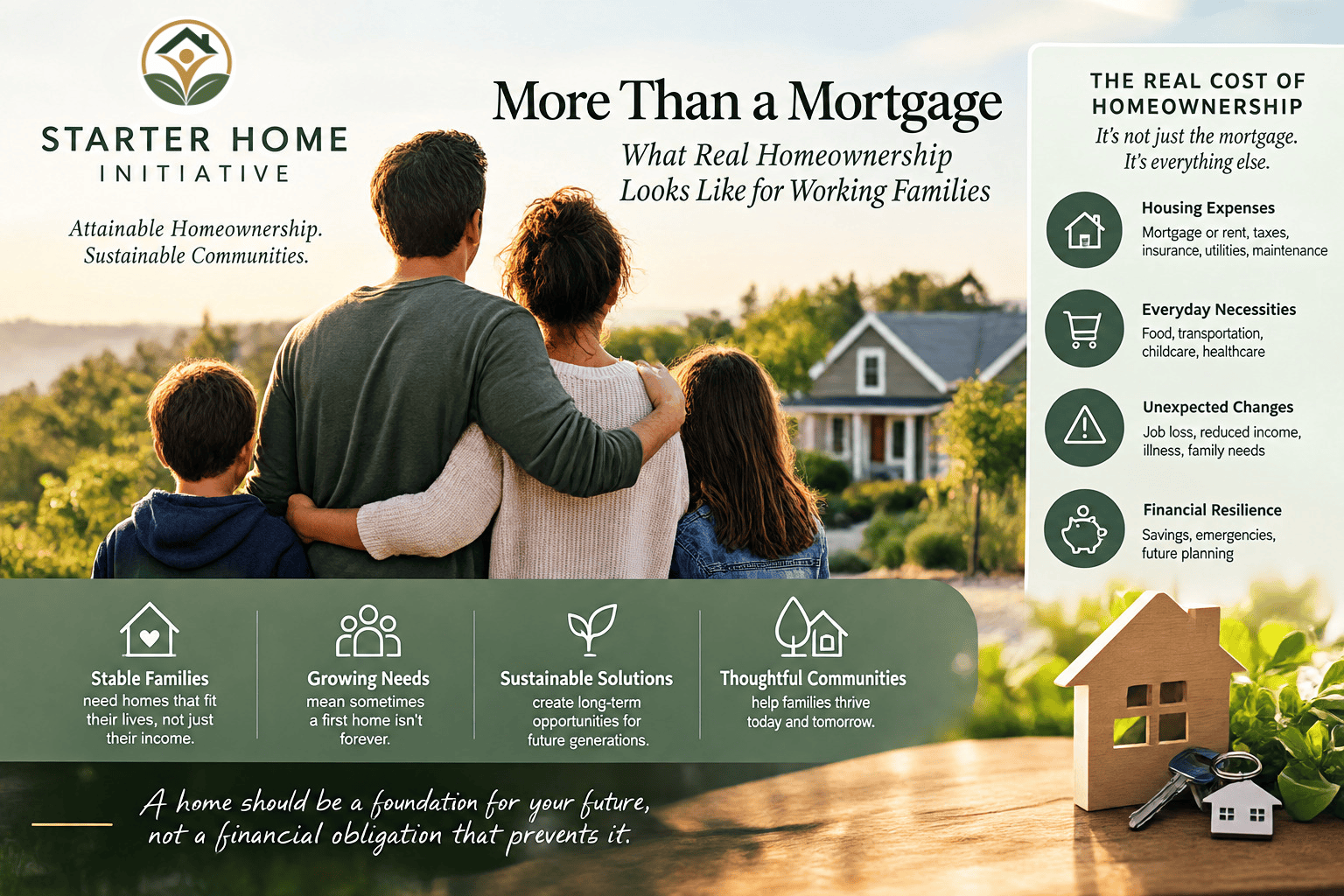
Housing Expenses
Mortgage or rent, taxes, insurance, utilities, and maintenance.
Everyday Necessities
Food, transportation, childcare, healthcare, and other essentials.
Changing Circumstances
Job loss, reduced earnings, illness, and evolving family needs.
Financial Resilience
Emergency savings, future planning, and the ability to manage unexpected costs.
Educational framework illustrating relevant household expenses and financial considerations.
A home should not require a family to sacrifice every opportunity to save, prepare for emergencies, or enjoy a reasonable measure of financial stability.
Nor should the pursuit of homeownership end with the purchase itself. Families need housing that can remain manageable over time.
Rethinking What a Starter Home Can Be
For some households, a starter home is their first opportunity to own property.
For others, it may be a modest, thoughtfully designed home that offers a more sustainable alternative to their current housing situation.
The common need is not necessarily a larger home or a more expensive one. It is access to housing that provides an appropriate balance of space, cost, and long-term stability.
This is why modest home designs, responsible development costs, and shared community amenities deserve consideration in conversations about attainable homeownership.
By making thoughtful use of space and resources, we can explore ways to create homes that support everyday living without placing unnecessary financial demands on the families who live in them.
Our Vision at Starter Home Initiative
Starter Home Initiative was founded on the belief that homeownership should provide a foundation for a family’s future.
Through our proposed cottage community, The Orchard Shire, we are exploring an approach that brings together modest homes, shared amenities, sustainable living, and long-term affordability.
Our project is still in its early planning stages. As we develop our financing and ownership structure, we will work to establish eligibility requirements that align with our charitable mission, applicable housing programs, and the needs of the households we can responsibly serve.
Our goal is not simply to create another opportunity to purchase a home. It is to explore a model of homeownership that considers what families can realistically maintain over time.
Because attainable homeownership should mean
more than having enough income to qualify
for a mortgage.
It should mean having a home that supports
your life, rather than a financial obligation
that consumes it.